 Add to Chrome
 Add to Firefox
 Add to Edge
Transformers Provably Learn to Internalize Chain-of-Thought
May 27, 2026
Chain-of-Thought (CoT) prompting substantially improves the sample efficiency of transformers, reducing the complexity of tasks like parity learning from exponential to polynomial in the input length. However, generating explicit reasoning steps at inference is computationally expensive. Implicit Chain-of-Thought (ICoT) has emerged as a promising empirical remedy that trains models to internalize intermediate steps within their hidden states, but its theoretical foundations remain poorly understood. We give the first theoretical analysis of ICoT, proving that an $L$-layer transformer trained under our proposed Log-ICoT curriculum learns $k$-parity with $\mathsf{poly}(n)$ samples and $L = \log_2 k$ training stages. This matches the sample efficiency of explicit CoT while eliminating its inference overhead, and extends prior one-layer parity guarantees to multi-layer architectures. Compared to standard ICoT, which removes thinking tokens one at a time, Log-ICoT removes them in geometric chunks, reducing the number of stages from linear in $k$ to logarithmic. Experiments on multi-layer transformers confirm the theory and visualize how reasoning is progressively absorbed into deeper layers.

Multi-Objective Learning for Diffusion Models: A Statistical Theory under Semi-Supervised Learning
May 24, 2026Diffusion models are increasingly used as powerful conditional generators, yet real deployments often involve multiple target distributions arising from different tasks, e.g., diverse prompt domains in text-to-image generation, or multiple environments in robotics with diffusion policies. This naturally leads to a multi-objective learning (MOL) problem. A key challenge is that achieving good Pareto trade-offs can require a generalist model class with substantially larger capacity than what suffices for solving any individual task, thereby increasing statistical cost since sample complexity typically scales with the model complexity. To reconcile this, we develop a principled MOL framework for diffusion models with limited data: a semi-supervised regime where paired (labeled) samples are scarce, but (unlabeled) condition data are abundant. We propose a two-stage training procedure that first fits lightweight specialist models from limited paired data, and then distills them into a generalist model by generating pseudo-samples. We establish generalization bounds showing that the required number of paired samples only depends on the complexity of the specialist model classes. We further extend the theory to diffusion policies for sequential decision making to account for distribution shift in on-policy rollouts. Extensive experiments on robotic control and image restoration tasks are conducted to verify our theoretical results.
AutoResearch AI: Towards AI-Powered Research Automation for Scientific Discovery
May 22, 2026Scientific research is being reshaped by AI systems that move beyond isolated assistance toward longer-horizon workflows spanning literature grounding, hypothesis generation, experimentation, validation, reporting, and revision. This shift marks a transition from task-level AI for science to workflow-level research automation. Yet current systems remain fragmented, differing in autonomy, domain scope, execution environment, validation mechanism, and human oversight, while still struggling with evidence preservation, reproducibility, weak-direction rejection, provenance tracking, cross-domain robustness, and accountable scientific closure. This survey examines these developments through AutoResearch, defined as the developmental spectrum of AI-powered scientific workflow automation. Within it, Vibe Research denotes the human-steered region of prompt-based assistance and human-verified execution, whereas emerging AI-led systems coordinate larger portions of the discovery loop without achieving robust autonomy. We analyze how research systems redistribute control, evidence, execution, validation, and accountability across workflows and organize the field around five workflow conditions: literature and research grounding; hypothesis formation and planning; experimentation and tool use; feedback, validation, and review; and reporting and knowledge communication. We further synthesize AI scientist systems, mixed-initiative co-research frameworks, benchmarks, domain deployments, and open-source infrastructures. Finally, we propose five evaluation dimensions--novelty, validity, impact, reliability, and provenance--and show that AutoResearch autonomy is domain-conditioned, being more credible in structured, executable, and rapidly verifiable settings but limited in embodied, delayed, heterogeneous, ethical, or institutionally accountable contexts.
Breaking the Reversal Curse in Autoregressive Language Models via Identity Bridge
Feb 02, 2026Autoregressive large language models (LLMs) have achieved remarkable success in many complex tasks, yet they can still fail in very simple logical reasoning such as the "reversal curse" -- when trained on forward knowledge data of the form "$A \rightarrow B$" (e.g., Alice's husband is Bob), the model is unable to deduce the reversal knowledge "$B \leftarrow A$" (e.g., Bob's wife is Alice) during test. Extensive prior research suggests that this failure is an inherent, fundamental limit of autoregressive causal LLMs, indicating that these models tend to memorize factual-level knowledge rather than capture higher-level rules. In this paper, we challenge this view by showing that this seemingly fundamental limit can be mitigated by slightly tweaking the training data with a simple regularization data recipe called the Identity Bridge of the form "$A \to A$" (e.g., The name of Alice is Alice). Theoretically, we prove that under this recipe, even a one-layer transformer can break the reversal curse by analyzing the implicit bias of gradient descent. Empirically, we show that a 1B pretrained language model finetuned with the proposed data recipe achieves a 40% success rate on reversal tasks, in stark contrast to a near-zero success rate when trained solely on forward-knowledge data. Our work provides a novel theoretical foundation for the reversal curse and offers a principled, low-cost path to encouraging LLMs to learn higher-level rules from data.
Generalization or Hallucination? Understanding Out-of-Context Reasoning in Transformers
Jun 12, 2025Large language models (LLMs) can acquire new knowledge through fine-tuning, but this process exhibits a puzzling duality: models can generalize remarkably from new facts, yet are also prone to hallucinating incorrect information. However, the reasons for this phenomenon remain poorly understood. In this work, we argue that both behaviors stem from a single mechanism known as out-of-context reasoning (OCR): the ability to deduce implications by associating concepts, even those without a causal link. Our experiments across five prominent LLMs confirm that OCR indeed drives both generalization and hallucination, depending on whether the associated concepts are causally related. To build a rigorous theoretical understanding of this phenomenon, we then formalize OCR as a synthetic factual recall task. We empirically show that a one-layer single-head attention-only transformer with factorized output and value matrices can learn to solve this task, while a model with combined weights cannot, highlighting the crucial role of matrix factorization. Our theoretical analysis shows that the OCR capability can be attributed to the implicit bias of gradient descent, which favors solutions that minimize the nuclear norm of the combined output-value matrix. This mathematical structure explains why the model learns to associate facts and implications with high sample efficiency, regardless of whether the correlation is causal or merely spurious. Ultimately, our work provides a theoretical foundation for understanding the OCR phenomenon, offering a new lens for analyzing and mitigating undesirable behaviors from knowledge injection.
OVERT: A Benchmark for Over-Refusal Evaluation on Text-to-Image Models
May 28, 2025Text-to-Image (T2I) models have achieved remarkable success in generating visual content from text inputs. Although multiple safety alignment strategies have been proposed to prevent harmful outputs, they often lead to overly cautious behavior -- rejecting even benign prompts -- a phenomenon known as $\textit{over-refusal}$ that reduces the practical utility of T2I models. Despite over-refusal having been observed in practice, there is no large-scale benchmark that systematically evaluates this phenomenon for T2I models. In this paper, we present an automatic workflow to construct synthetic evaluation data, resulting in OVERT ($\textbf{OVE}$r-$\textbf{R}$efusal evaluation on $\textbf{T}$ext-to-image models), the first large-scale benchmark for assessing over-refusal behaviors in T2I models. OVERT includes 4,600 seemingly harmful but benign prompts across nine safety-related categories, along with 1,785 genuinely harmful prompts (OVERT-unsafe) to evaluate the safety-utility trade-off. Using OVERT, we evaluate several leading T2I models and find that over-refusal is a widespread issue across various categories (Figure 1), underscoring the need for further research to enhance the safety alignment of T2I models without compromising their functionality. As a preliminary attempt to reduce over-refusal, we explore prompt rewriting; however, we find it often compromises faithfulness to the meaning of the original prompts. Finally, we demonstrate the flexibility of our generation framework in accommodating diverse safety requirements by generating customized evaluation data adapting to user-defined policies.
Fast Adversarial Training against Sparse Attacks Requires Loss Smoothing
Feb 28, 2025
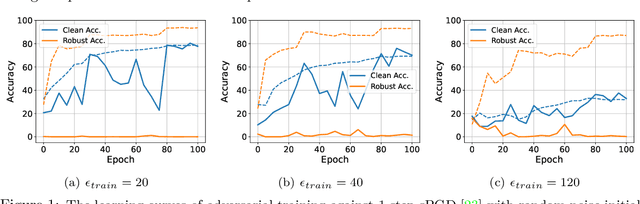

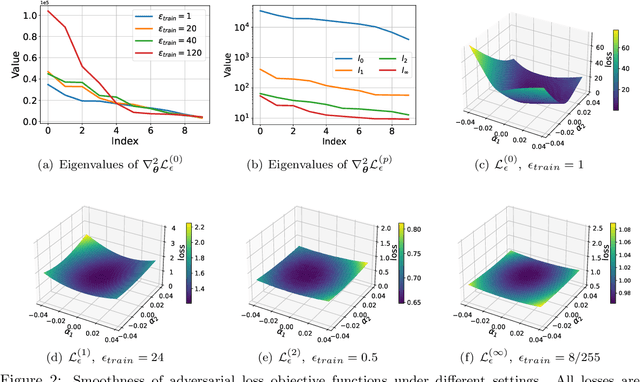
This paper studies fast adversarial training against sparse adversarial perturbations bounded by $l_0$ norm. We demonstrate the challenges of employing $1$-step attacks on $l_0$ bounded perturbations for fast adversarial training, including degraded performance and the occurrence of catastrophic overfitting (CO). We highlight that CO in $l_0$ adversarial training is caused by sub-optimal perturbation locations of $1$-step attack. Theoretical and empirical analyses reveal that the loss landscape of $l_0$ adversarial training is more craggy compared to its $l_\infty$, $l_2$ and $l_1$ counterparts. Moreover, we corroborate that the craggy loss landscape can aggravate CO. To address these issues, we propose Fast-LS-$l_0$ that incorporates soft labels and the trade-off loss function to smooth the adversarial loss landscape. Extensive experiments demonstrate our method can overcome the challenge of catastrophic overfitting, achieve state-of-the-art performance, and narrow down the performance gap between $1$-step and multi-step adversarial training against sparse attacks.
On the Power of Convolution Augmented Transformer
Jul 08, 2024The transformer architecture has catalyzed revolutionary advances in language modeling. However, recent architectural recipes, such as state-space models, have bridged the performance gap. Motivated by this, we examine the benefits of Convolution-Augmented Transformer (CAT) for recall, copying, and length generalization tasks. CAT incorporates convolutional filters in the K/Q/V embeddings of an attention layer. Through CAT, we show that the locality of the convolution synergizes with the global view of the attention. Unlike comparable architectures, such as Mamba or transformer, CAT can provably solve the associative recall (AR) and copying tasks using a single layer while also enjoying guaranteed length generalization. We also establish computational tradeoffs between convolution and attention by characterizing how convolution can mitigate the need for full attention by summarizing the context window and creating salient summary tokens to attend. Evaluations on real datasets corroborate our findings and demonstrate that CAT and its variations indeed enhance the language modeling performance.
Towards Efficient Training and Evaluation of Robust Models against $l_0$ Bounded Adversarial Perturbations
May 08, 2024This work studies sparse adversarial perturbations bounded by $l_0$ norm. We propose a white-box PGD-like attack method named sparse-PGD to effectively and efficiently generate such perturbations. Furthermore, we combine sparse-PGD with a black-box attack to comprehensively and more reliably evaluate the models' robustness against $l_0$ bounded adversarial perturbations. Moreover, the efficiency of sparse-PGD enables us to conduct adversarial training to build robust models against sparse perturbations. Extensive experiments demonstrate that our proposed attack algorithm exhibits strong performance in different scenarios. More importantly, compared with other robust models, our adversarially trained model demonstrates state-of-the-art robustness against various sparse attacks. Codes are available at https://github.com/CityU-MLO/sPGD.
Mechanics of Next Token Prediction with Self-Attention
Mar 12, 2024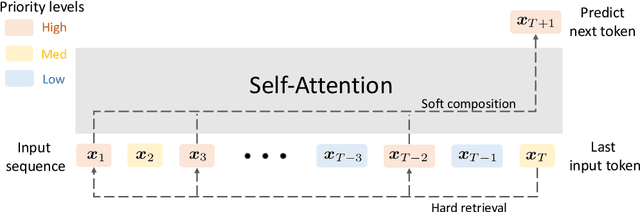


Transformer-based language models are trained on large datasets to predict the next token given an input sequence. Despite this simple training objective, they have led to revolutionary advances in natural language processing. Underlying this success is the self-attention mechanism. In this work, we ask: $\textit{What}$ $\textit{does}$ $\textit{a}$ $\textit{single}$ $\textit{self-attention}$ $\textit{layer}$ $\textit{learn}$ $\textit{from}$ $\textit{next-token}$ $\textit{prediction?}$ We show that training self-attention with gradient descent learns an automaton which generates the next token in two distinct steps: $\textbf{(1)}$ $\textbf{Hard}$ $\textbf{retrieval:}$ Given input sequence, self-attention precisely selects the $\textit{high-priority}$ $\textit{input}$ $\textit{tokens}$ associated with the last input token. $\textbf{(2)}$ $\textbf{Soft}$ $\textbf{composition:}$ It then creates a convex combination of the high-priority tokens from which the next token can be sampled. Under suitable conditions, we rigorously characterize these mechanics through a directed graph over tokens extracted from the training data. We prove that gradient descent implicitly discovers the strongly-connected components (SCC) of this graph and self-attention learns to retrieve the tokens that belong to the highest-priority SCC available in the context window. Our theory relies on decomposing the model weights into a directional component and a finite component that correspond to hard retrieval and soft composition steps respectively. This also formalizes a related implicit bias formula conjectured in [Tarzanagh et al. 2023]. We hope that these findings shed light on how self-attention processes sequential data and pave the path toward demystifying more complex architectures.